
The Complete Guide to Starting a Successful Pizza Franchise in 2025
Picture this: you're standing in front of a bustling pizzeria, watching satisfied customers bite into perfectly crafted slices while the aroma of fresh dough and melted cheese fills the air. The cash register rings constantly, delivery drivers rush in and out, and you realize this could be your future. The pizza franchise industry isn't just thriving—it's experiencing unprecedented growth, making 2025 the perfect time to dive into this lucrative business opportunity.
The pizza industry generates over $145 billion annually worldwide, with franchised locations accounting for a significant portion of this revenue. As an aspiring entrepreneur looking to enter the food service industry, understanding the ins and outs of a pizza franchise can be your ticket to financial independence and business success.
Key Takeaways
• Pizza franchises offer proven business models with established brand recognition, operational systems, and ongoing support that significantly reduce startup risks compared to independent restaurants
• Initial investment ranges vary widely from $175,000 to $750,000 depending on the franchise brand, location size, and equipment requirements, making it accessible to various investment levels
• Location selection is critical for success, with high-traffic areas, demographic alignment, and proper market analysis being essential factors for profitability
• Ongoing support and training from franchisors provide valuable resources including marketing assistance, operational guidance, and continuous menu development
• Multiple revenue streams including dine-in, takeout, delivery, and catering services create diverse income opportunities that can adapt to changing market conditions
Understanding the Pizza Franchise Landscape
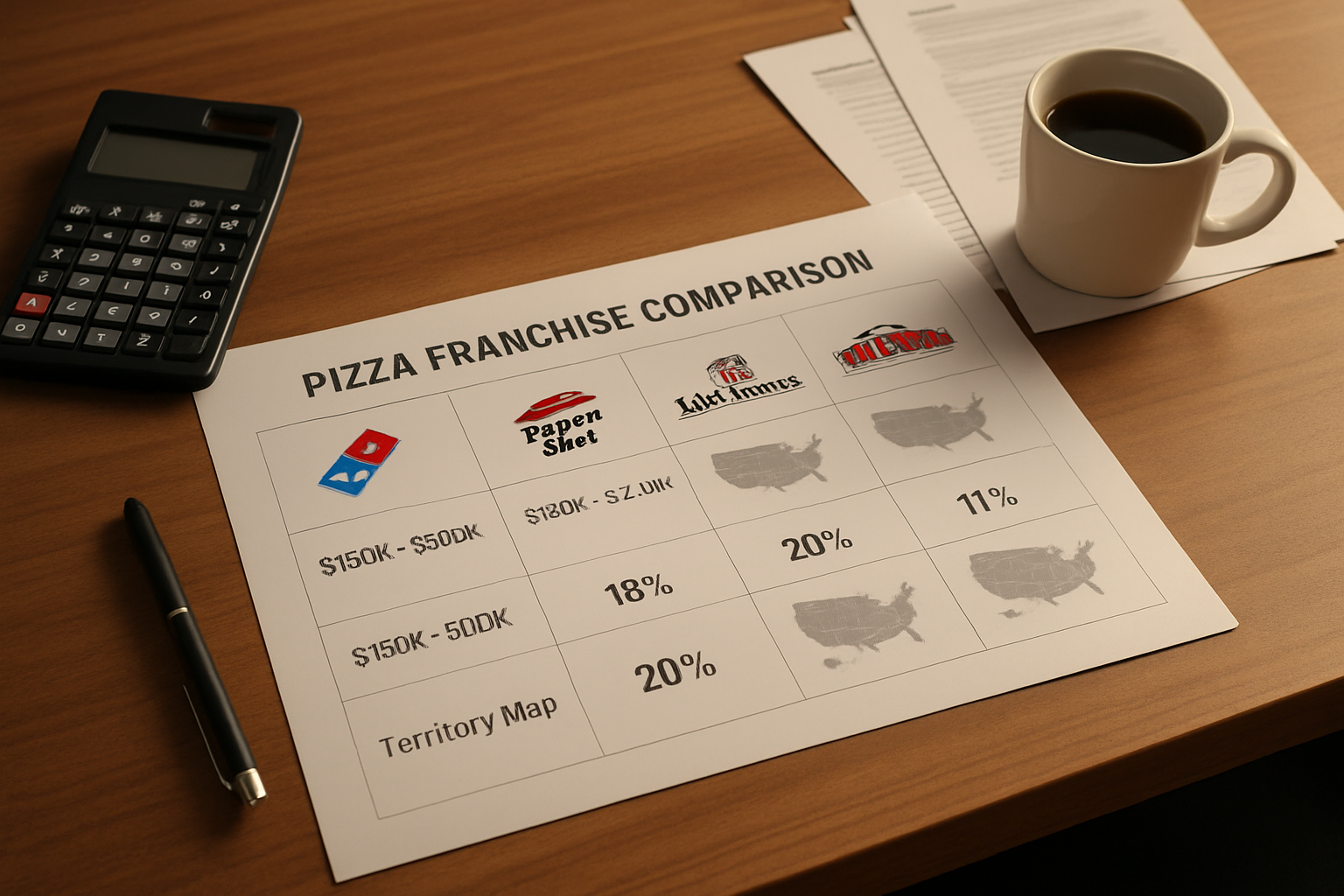
The pizza franchise market has evolved dramatically over the past decade. What once was dominated by a few major players has now expanded to include numerous specialized concepts, each targeting different market segments and consumer preferences. From traditional Italian-style pizzerias to fast-casual build-your-own concepts, the diversity in pizza franchising has never been greater.
Market Size and Growth Potential
The pizza industry continues to show remarkable resilience and growth. According to recent industry reports, the pizza market is expected to reach $233 billion by 2027, with franchise operations leading this expansion. This growth is driven by several factors:
- Increased demand for convenience foods 📈
- Growing popularity of food delivery services
- Rising consumer spending on dining experiences
- Expansion into international markets
- Innovation in menu offerings and dietary accommodations
The beauty of entering a pizza franchise lies in tapping into this established and growing market with the support of a proven business model.
Types of Pizza Franchise Concepts
Modern pizza franchising offers various concepts to match different investment levels and market approaches:
Fast-Casual Pizza Franchises focus on quick service with customizable options, appealing to health-conscious consumers who want fresh, made-to-order meals.
Traditional Pizzeria Franchises emphasize authentic recipes, family dining experiences, and full-service restaurant atmospheres.
Delivery-Focused Concepts prioritize speed and convenience, often operating from smaller locations with minimal seating.
Specialty Pizza Franchises cater to specific dietary needs or unique flavor profiles, such as gluten-free, vegan, or gourmet options.
When considering a cheesesteak franchise alongside pizza offerings, you're looking at concepts that combine multiple popular food categories under one roof, maximizing revenue potential and customer appeal.
Evaluating Pizza Franchise Opportunities
Choosing the right pizza franchise requires careful analysis of multiple factors that will impact your long-term success. The decision shouldn't be taken lightly, as it will affect your financial future, daily operations, and overall business satisfaction.
Financial Investment Requirements
Understanding the complete financial picture is crucial before committing to any franchise opportunity. Here's a breakdown of typical investment components:
| Investment Category | Low-End Estimate | High-End Estimate |
|---|---|---|
| Franchise Fee | $25,000 | $75,000 |
| Equipment & Kitchen Setup | $75,000 | $200,000 |
| Leasehold Improvements | $50,000 | $150,000 |
| Initial Inventory | $5,000 | $15,000 |
| Working Capital | $20,000 | $60,000 |
| Marketing Launch | $10,000 | $30,000 |
| Total Investment | $185,000 | $530,000 |
These figures can vary significantly based on location, size, and specific franchise requirements. Some premium pizza franchise brands may require investments exceeding $750,000 for larger locations in prime markets.
Brand Recognition and Market Position
The strength of a franchise brand directly impacts your ability to attract customers and compete effectively. When evaluating pizza franchise opportunities, consider:
- National advertising presence and marketing support
- Customer loyalty programs and retention strategies
- Digital presence and online ordering capabilities
- Social media engagement and brand awareness
- Competitive positioning within your target market
Established brands like Anthony & Lucas Pizza offer the advantage of proven concepts with strong local recognition and customer loyalty.
Franchise Support Systems
The level of ongoing support provided by your franchisor can make or break your success. Quality pizza franchise systems offer:
Comprehensive Training Programs covering operations, management, customer service, and financial management.
Marketing Support including national advertising campaigns, local marketing materials, and digital marketing assistance.
Operational Guidance with regular visits from field consultants, performance reviews, and troubleshooting support.
Supply Chain Management ensuring consistent product quality, competitive pricing, and reliable inventory management.
Technology Support including point-of-sale systems, online ordering platforms, and business management software.
"The best franchise partners don't just sell you a concept—they invest in your success through ongoing support and guidance." – Industry Expert
Territory Rights and Expansion Opportunities
Understanding your territorial rights is essential for long-term planning and growth potential. Key considerations include:
- Protected territory size and population density
- Expansion rights for additional locations
- Non-compete restrictions and their implications
- Territory modification policies as markets evolve
- Multi-unit development opportunities and incentives
Some franchisors offer significant discounts for multi-unit commitments, making expansion more attractive and profitable.
Steps to Launch Your Pizza Franchise

Successfully launching a pizza franchise requires systematic planning, careful execution, and attention to detail. The process typically takes 6-12 months from initial application to grand opening, depending on various factors including financing, site selection, and construction timelines.
Initial Research and Due Diligence
Before committing to any franchise opportunity, conduct thorough research to ensure alignment with your goals, financial capacity, and market conditions.
Franchise Disclosure Document (FDD) Review is your first critical step. This legal document contains essential information about the franchise system, including:
- Financial performance representations
- Franchisee obligations and restrictions
- Franchisor's business experience and litigation history
- Territory rights and fee structures
- Training and support programs
Market Analysis should include demographic studies, competitor analysis, and location viability assessments. Understanding your local market dynamics helps predict success potential and identify optimal positioning strategies.
Financial Planning extends beyond initial investment to include ongoing operational costs, royalty fees, marketing contributions, and working capital requirements. Many successful franchisees recommend having 12-18 months of operating expenses available beyond the initial investment.
Site Selection and Lease Negotiation
Location often determines the success or failure of a pizza franchise. The old adage "location, location, location" rings especially true in the restaurant industry.
High-Traffic Areas with good visibility and easy access are essential. Consider proximity to:
- Residential neighborhoods
- Office complexes and business districts
- Schools and universities
- Shopping centers and entertainment venues
- Public transportation hubs
Demographic Alignment ensures your target customers are present in sufficient numbers. Analyze:
- Population density and age distribution
- Income levels and spending patterns
- Family composition and lifestyle preferences
- Competition density and market saturation
Lease Terms can significantly impact profitability. Negotiate favorable terms including:
- Competitive base rent with reasonable escalations
- Percentage rent caps and exclusions
- Assignment rights for franchise transfers
- Build-out allowances and improvement contributions
- Exclusive use clauses for food service
Many franchisors provide site selection assistance and lease negotiation support, leveraging their experience and relationships to secure optimal locations.
Training and Preparation
Comprehensive training prepares you for successful operations and helps establish proper systems from day one. Most pizza franchise training programs include:
Classroom Training covering business fundamentals, franchise systems, financial management, and marketing strategies.
Hands-On Operational Training in working locations where you learn food preparation, customer service, inventory management, and daily operations.
Management Training focusing on staff hiring and training, scheduling, cost control, and performance management.
Technology Training on point-of-sale systems, online ordering platforms, inventory management software, and reporting tools.
For concepts that combine pizza with other offerings, such as pizza kitchen franchise operations, training may be more extensive to cover multiple menu categories and preparation techniques.
Grand Opening and Marketing Launch
A successful grand opening creates momentum and establishes your presence in the local market. Effective launch strategies include:
Pre-Opening Marketing builds awareness and anticipation through:
- Social media campaigns and community engagement
- Local media coverage and press releases
- Sampling events and promotional partnerships
- Direct mail and digital advertising campaigns
Grand Opening Events should create excitement and drive trial visits:
- Special pricing and promotional offers
- Live entertainment and family activities
- Charity partnerships and community involvement
- VIP previews for local influencers and media
Follow-Up Marketing maintains momentum beyond the initial launch:
- Customer feedback collection and response
- Loyalty program enrollment and engagement
- Regular promotional calendars and seasonal offerings
- Community involvement and local partnerships
The goal is to establish a strong customer base quickly while building positive word-of-mouth and brand recognition in your market.
Ongoing Operations and Growth
Once your pizza franchise is operational, focus shifts to consistent execution, continuous improvement, and strategic growth planning.
Quality Control maintains brand standards and customer satisfaction through:
- Regular training updates and skill development
- Consistent food preparation and presentation standards
- Customer service excellence and complaint resolution
- Facility maintenance and cleanliness protocols
Financial Management ensures profitability and sustainable growth:
- Daily sales tracking and cost analysis
- Labor scheduling optimization
- Inventory management and waste reduction
- Cash flow planning and expense control
Marketing and Customer Retention drive long-term success:
- Local marketing initiatives and community engagement
- Customer loyalty programs and retention strategies
- Online reputation management and review responses
- Seasonal promotions and menu innovations
Performance Monitoring helps identify opportunities for improvement:
- Sales trend analysis and forecasting
- Customer feedback evaluation and action planning
- Operational efficiency assessments
- Competitive analysis and market positioning
Many successful franchisees eventually expand to multiple locations, leveraging their operational expertise and market knowledge to build mini-empires within their franchise systems.
Conclusion
The pizza franchise industry offers tremendous opportunities for entrepreneurs seeking proven business models with strong growth potential. Success requires careful planning, adequate capitalization, strategic location selection, and commitment to operational excellence.
The combination of America's love affair with pizza, the convenience of franchised systems, and the ongoing evolution of dining preferences creates a compelling investment opportunity. Whether you're interested in traditional pizzerias, fast-casual concepts, or innovative combinations like those offered by Anthony & Lucas Pizza, the key is finding the right fit for your market, investment capacity, and personal goals.
Next Steps for Aspiring Pizza Franchise Owners
- Conduct thorough market research in your target area to identify opportunities and competition
- Evaluate multiple franchise opportunities to compare investment requirements, support systems, and growth potential
- Secure adequate financing including initial investment plus 12-18 months of operating capital
- Consult with franchise attorneys and accountants to review agreements and financial projections
- Connect with existing franchisees to gain insights into real-world operations and challenges
- Contact franchise representatives to discuss opportunities and begin the application process
The pizza industry's resilience and growth trajectory make it an attractive franchise opportunity for 2025 and beyond. With proper preparation, strategic planning, and commitment to excellence, your pizza franchise can become a cornerstone of both your financial future and your local community's dining landscape.
Remember, successful franchising is a partnership between you and your franchisor. Choose wisely, prepare thoroughly, and execute consistently to maximize your chances of building a thriving, profitable business that serves your community for years to come.
References

[1] Pizza Industry Market Research Report 2025, National Restaurant Association
[2] Franchise Business Economic Outlook 2025, International Franchise Association
[3] Food Service Industry Growth Projections, IBISWorld Research
[4] Small Business Administration Franchise Financing Guidelines
[5] Restaurant Industry Financial Benchmarks, Restaurant Industry Report
SEO Meta Information
Meta Title: Pizza Franchise Guide 2025: Complete Startup & Investment Tips
Meta Description: Discover how to start a profitable pizza franchise in 2025. Complete guide covering costs, opportunities, training, and success strategies for entrepreneurs.